Italy’s Friuli Venezia Giulia region rarely makes the front pages of travel brochures, yet it is home to an extraordinary collection of treasures: from the ancient Roman city of Aquileia and the enchanting town of Palmanova, the only city in the world built entirely according to Renaissance ideals, in the shape of a perfect nine-pointed star to Miramare Castle, the seaside residence of Maximilian of Habsburg, the ill-fated Emperor of Mexico who was executed by rebels thousands of miles away from home
TRAVELOGUE
By Robert Čoban
Italy boasts no shortage of world-famous destinations: Rome, Milan, Venice, Tuscany, Sicily, Puglia, Capri, the Amalfi Coast, the Dolomites, Lake Garda, Lake Como, Genoa, Sanremo. Friuli Venezia Giulia is rarely mentioned alongside these household names. Most travelers simply pass through on their way to Venice, Milan, or the ski resorts of the Dolomites, perhaps stopping briefly at the Palmanova Outlet Village before continuing their journey.
Yet this northeastern corner of Italy has far more to offer. Beyond Trieste—well known throughout the former Yugoslavia and enjoying renewed popularity in recent years, while also serving as the region’s capital—lie numerous lesser-known attractions. The region’s principal cities include Trieste, Gorizia, Udine, and Pordenone.
Friuli Venezia Giulia acquired its modern shape after the annexation of “Zone A” of the former Free Territory of Trieste to Italy in 1954. A decade later, Rome merged this territory with Friuli, which until then consisted of the provinces of Udine and Gorizia. Pordenone became a separate province only in 1968. The newly created region was granted a degree of autonomy, reflecting its cultural diversity and complex historical background. Not everyone welcomed the arrangement. The decision to designate Trieste as the regional capital met resistance from many Friulians, some of whom still believe Udine would have been the more appropriate choice.
Aquileia: A Forgotten Giant of the Roman World
Today, Aquileia is a quiet town of around 3,400 inhabitants. In the fourth century AD, however, on the eve of the collapse of the Western Roman Empire, it was Italy’s fourth-largest city after Rome, Milan, and Capua.
The town is best known for its magnificent Patriarchal Basilica, an 11th-century masterpiece and UNESCO World Heritage Site. Situated near the lower reaches of the Soča (Isonzo) River and only a few miles from the Adriatic, Aquileia occupied a strategic position controlling the narrow corridor between the Alps and the sea. Founded in 181 BC as a military colony, it evolved into one of the Roman Empire’s most important commercial and military centers, serving as a base for campaigns toward the Danube frontier.
Connected to the sea by canals and linked by a network of roads, Aquileia flourished for centuries. Today, together with Ravenna, it ranks among northern Italy’s most important archaeological sites. Excavations have uncovered streets, city walls, mosaics, inscriptions, sculptures, Roman coins, and countless artifacts, while vast portions of the ancient city remain buried beneath surrounding fields.
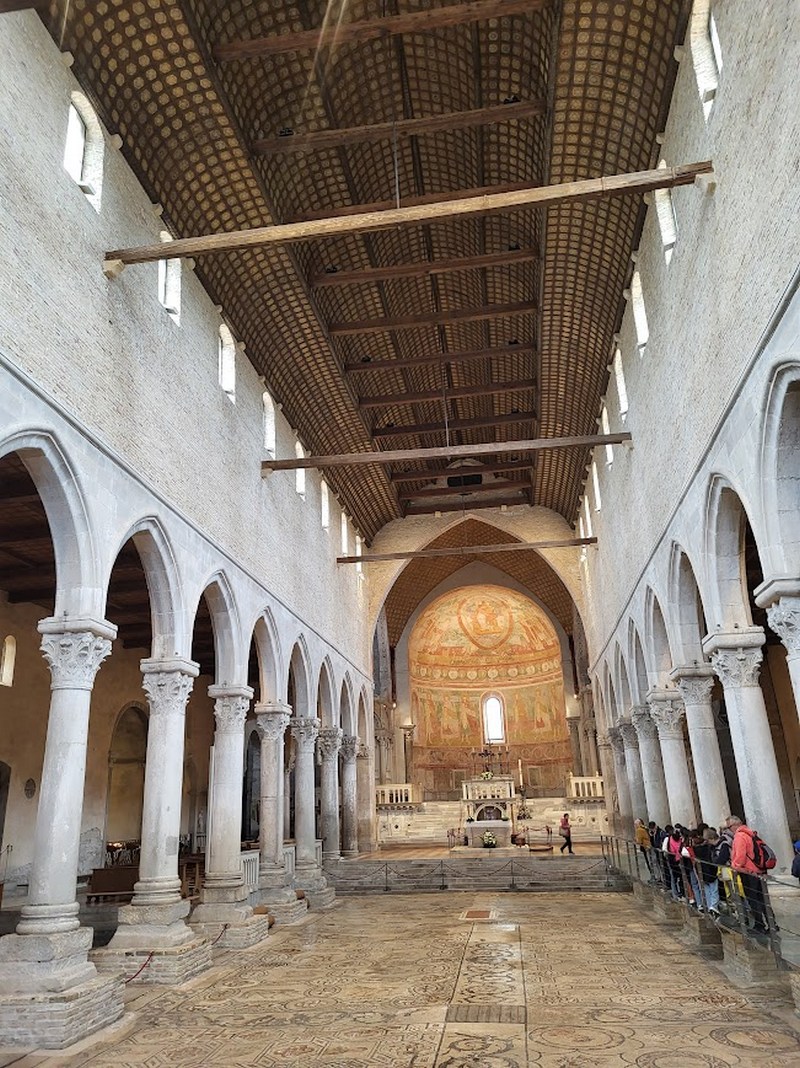
Aquileia witnessed pivotal moments in European history. Emperor Constantine II was killed outside its walls in 340 AD while attempting to seize the city from his brother Constans. In 381, the Council of Aquileia condemned Arianism under the leadership of Saint Ambrose. The city was devastated by Attila’s Huns in 452 after a three-month siege and later suffered further destruction under the Lombards.
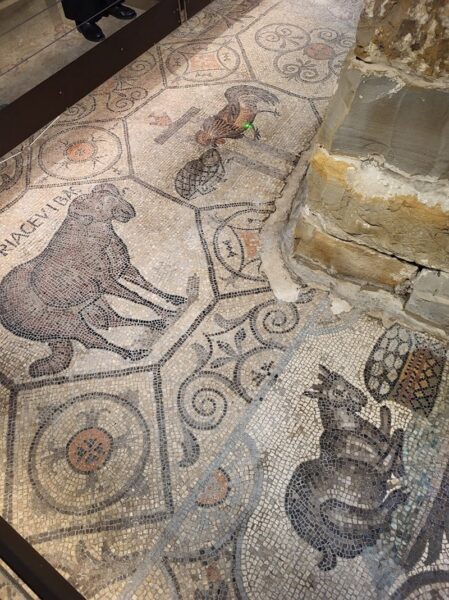
Despite repeated invasions, Aquileia retained immense religious importance. The Patriarchal Basilica played a crucial role in the Christianization of Central Europe during the early Middle Ages. Its breathtaking fourth-century floor mosaics remain among the finest examples of early Christian art anywhere in the world. Particularly striking is the depiction of the biblical story of Jonah and the great fish.

The basilica we see today was built in 1031 by Patriarch Poppo on the site of an earlier church and expanded in Gothic style in 1379. The Romanesque-Gothic façade leads into a complex that includes the remains of a fifth-century baptistery. Inside, visitors encounter a three-aisled basilica with remarkably preserved mosaics, a sixteenth-century wooden roof, and frescoes spanning nearly a millennium of Christian history.
A Roman road once connected Aquileia to Singidunum—modern-day Belgrade. Covering approximately 530 kilometers (330 miles), the journey required about twenty days on foot to reach Sirmium and another three days to continue to Singidunum, with travelers typically covering 20 to 25 kilometers per day.
Grado and Palmanova
Lunch was served by the sea in Grado, once a humble fishing village and now a charming resort town of roughly 7,500 residents. Built on the edge of a lagoon, Grado is crisscrossed by canals and often described as a “Little Venice.”
The town gained prominence during the fifth century, when waves of barbarian invasions drove refugees from inland settlements to seek safety along the coast. When the Lombards captured nearby Aquileia in 568, the city’s metropolitan bishop fled to Grado. The town subsequently became the seat of the Patriarchs of Aquileia, eventually forming the independent Patriarchate of Grado, which survived until 1451.
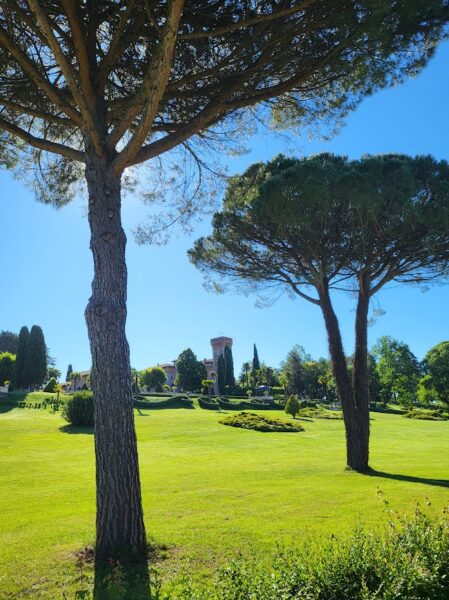
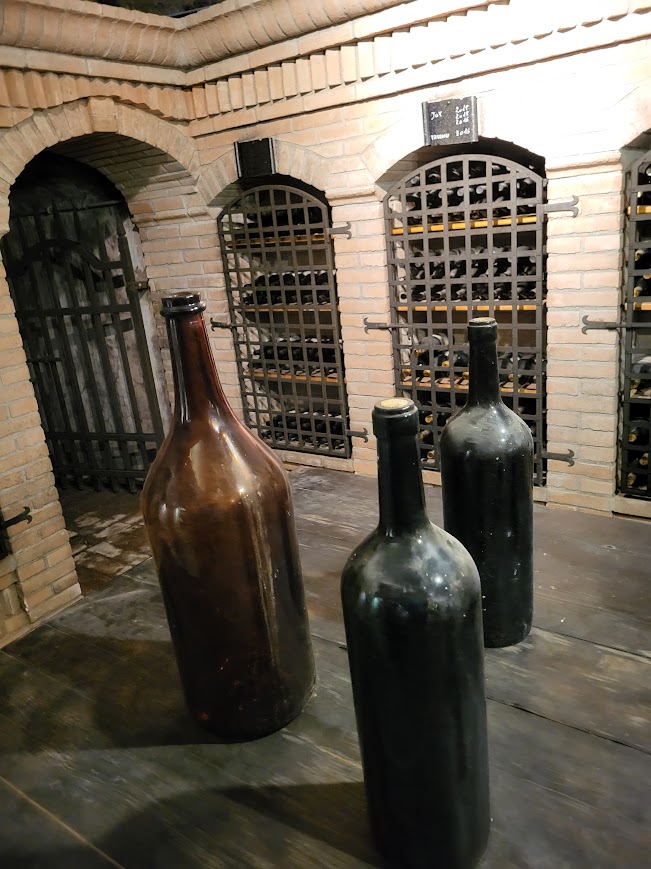
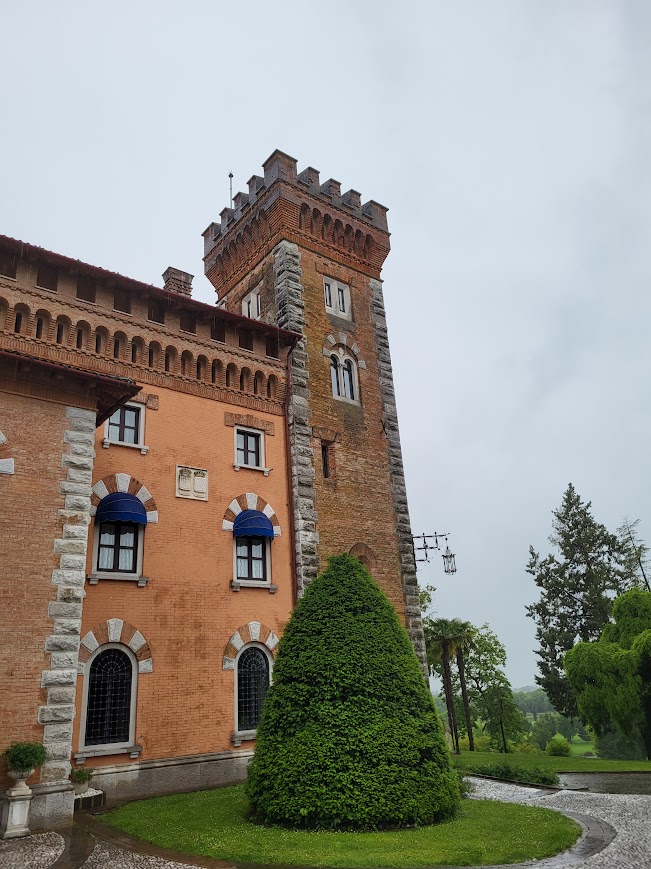
That evening we stayed at Castello di Spessa, a remarkable estate that combines a historic castle, luxury hotel, restaurants, winery, spa facilities, an 18-hole golf course, and more than 100 hectares of vineyards. Its wine cellars extend 18 meters underground, partly within a bunker constructed before World War II.
Although a Roman estate once occupied the site, the castle itself dates back to the thirteenth century. Its current appearance largely reflects a dramatic reconstruction undertaken between 1879 and 1901 by wealthy merchant Rodolfo Voelkl, following plans by Trieste architect Ruggero Berlam. Medieval fortifications were transformed into a romantic Neo-Gothic residence complete with towers, battlements, and decorative flourishes.
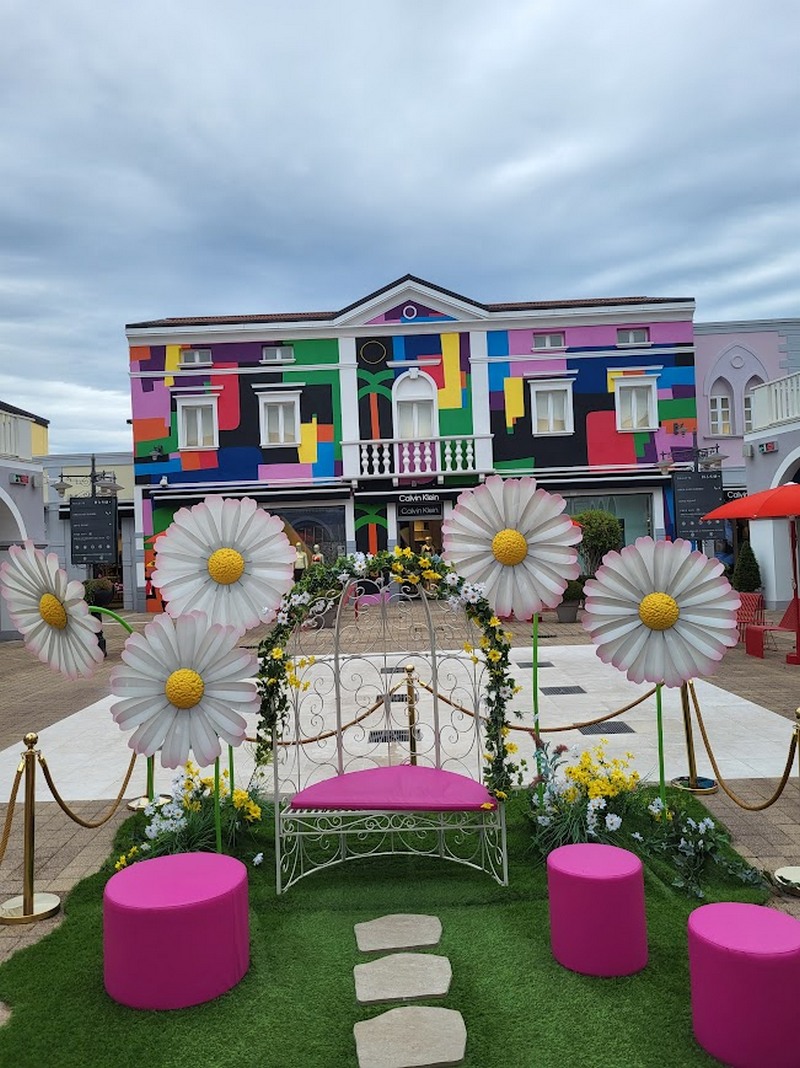
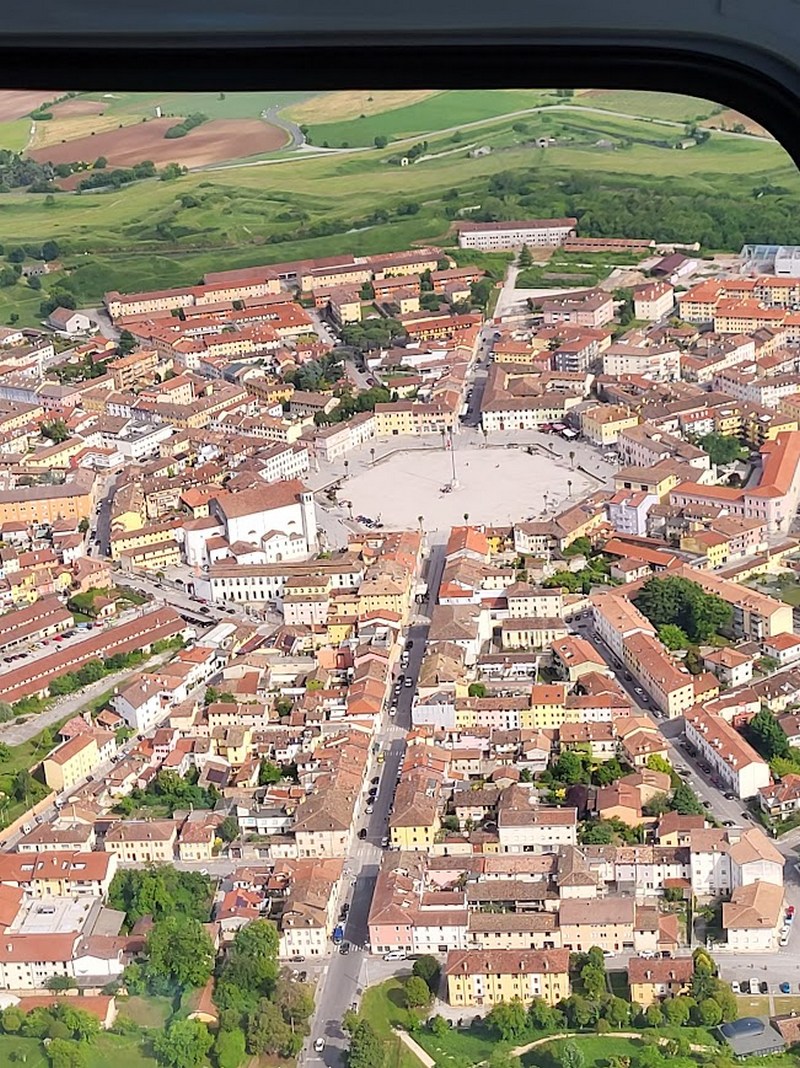
For most visitors, Palmanova means shopping. Yet just beyond the outlet village stands one of Europe’s most extraordinary urban creations. Founded by the Republic of Venice in 1593, Palmanova was designed according to Renaissance principles of ideal city planning. Viewed from above, it forms a perfect nine-pointed star centered on a spacious geometric square.
In 2017, Palmanova’s fortifications were added to UNESCO’s World Heritage List as part of the Venetian defensive system of the sixteenth and seventeenth centuries.
Our hosts offered us the best possible perspective—a helicopter flight above the region. The views were unforgettable: the snow-covered peaks of the Dolomites to one side, the blue waters of the Adriatic to the other, Grado nestled in its lagoon, and at the center the flawless geometry of Renaissance Palmanova.
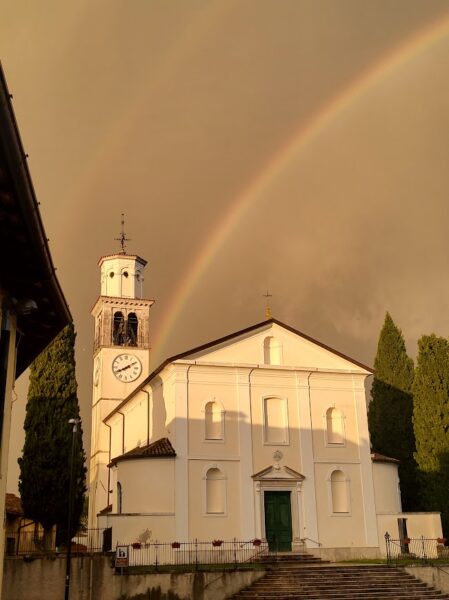
Later, while most of the group headed for dinner, my Slovenian colleague Lara and I walked toward the nearby village of Visco. A storm was approaching in the distance, and before us appeared a double rainbow unlike any I had ever seen. When the rain finally reached us, we took shelter in a local bar where residents were drinking beer and watching football.
As we talked, we found ourselves comparing rural Italy with home. Even the smallest villages here seemed better maintained than some of our most important tourist destinations. Everything felt balanced and tasteful, free from oversized concrete-and-glass developments that often disrupt historic environments. The countryside was filled with vineyards, apple orchards, dairy farms producing exceptional milk and cheese, and—since our visit coincided with World Bee Day on May 20—countless reminders of the vital role bees play in preserving both rural and urban ecosystems.
Miramare
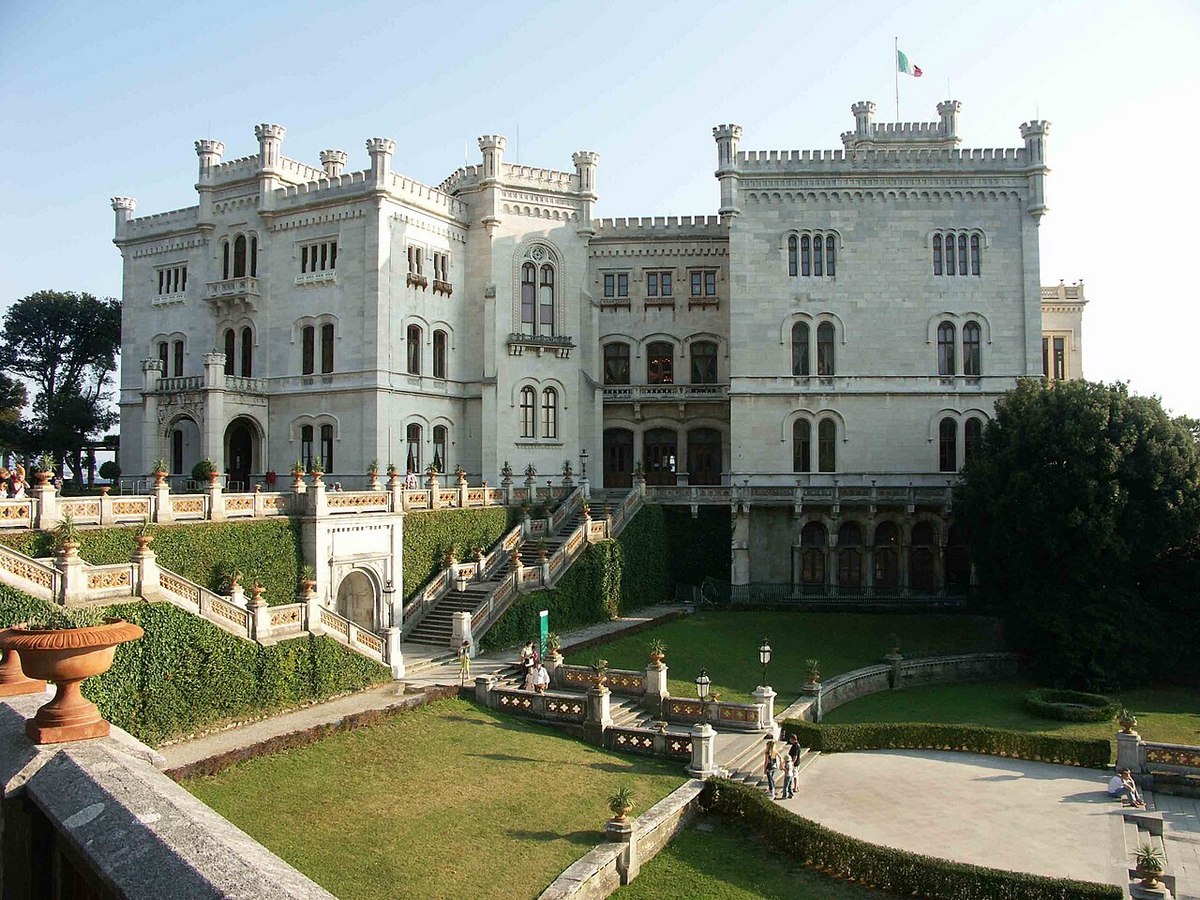
To round off our weekend in the Friuli Venezia Giulia region, we visited Miramare Castle, located just outside Trieste. Built as a gift for Archduke Maximilian of Habsburg, brother of Emperor Franz Joseph I and the future Emperor of Mexico, the castle overlooks the Gulf of Trieste. It was designed and constructed between 1856 and 1860 by the renowned Viennese architect Carl Junker.
The castle is surrounded by a magnificent 22-hectare park filled with plant species from all corners of the globe, many of which Maximilian brought back from his numerous voyages as an admiral in the Austrian Navy. Inside, the castle is divided into several richly furnished rooms. The ground floor housed the private apartments of Maximilian and his wife, Charlotte of Belgium. After the end of the First World War, when Trieste passed from Austrian to Italian rule, the upper floor was used by Duke Amedeo of Aosta, who lived here for seven years and redesigned several rooms in the fashionable Art Deco style of the period.
Curiously, a stay at Miramare brought little luck to another Habsburg heir, Archduke Franz Ferdinand. He and his wife Sophie spent two nights here, from 9 to 11 April 1914. What happened just two and a half months later is well known to history.
As for the ill-fated Maximilian, his life came to a tragic end in distant Mexico at the age of only 32. How did this happen?
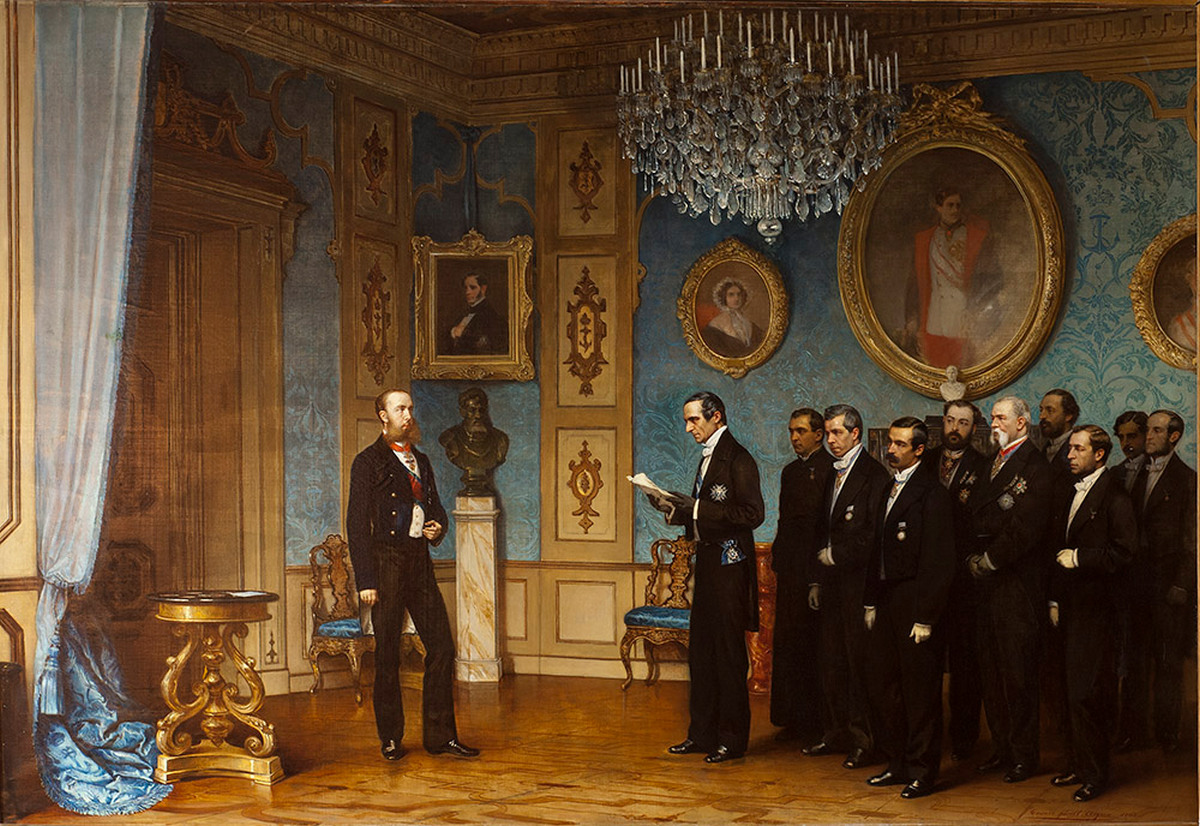
In 1859, Maximilian received the first invitation from Mexican monarchists, led by nobleman José Pablo Martínez del Río, to become Emperor of Mexico. A painting displayed at Miramare commemorates the visit of the Mexican delegation that arrived to offer him the imperial crown.
At the time, Mexico was deeply divided by a bitter struggle between the liberal government of President Benito Juárez and conservative factions opposed to his reforms. Maximilian initially declined the offer, reportedly replying, “A Habsburg is not a usurper.” However, following the intervention of several European powers including France, Belgium, Spain, and the United Kingdom on the side of Juárez’s opponents, and under the influence of French Emperor Napoleon III, circumstances changed dramatically. After General Élie-Frédéric Forey captured Mexico City and a plebiscite was organized in 1863 to restore the monarchy, the Second Mexican Empire was proclaimed.
Maximilian eventually accepted the crown on 10 April 1864. The decision cost him his hereditary rights in Austria, and even Franz Joseph opposed his brother’s departure for such a distant and uncertain venture. Upon arriving in Mexico on 28 May 1864, Maximilian officially became emperor. Yet his rule was never recognized by Juárez and the republican-liberal forces, who continued their struggle against the French-backed regime. By then, the other European powers had already withdrawn from Mexico after achieving their objectives, mainly related to the repayment of Mexican debts, leaving France as Maximilian’s principal supporter.