In the capital of the Renaissance, you don’t necessarily have to step inside museums or galleries to enjoy world-class art – it is all around you, as are the fascinating locations where scenes from the film Hannibal were shot
TRAVELOGUE
by Robert Čoban
Florence
“No, he would never go to Las Vegas. It would be an insult to his taste!” says FBI Agent Clarice Starling in Hannibal (2001). As it turns out, a letter from Lecter, sent via a Las Vegas post office box, had actually originated somewhere in Europe. Clarice notices an unusual fragrance on the paper, and laboratory analysis reveals that it comes from a luxury skin cream containing ambergris, an extremely rare ingredient used in the perfume industry. Investigators establish that the product is available in only a handful of places around the world, one of them Florence. Security camera footage from a Florentine perfumery confirms that the serial killer they are pursuing is indeed there. And so the story of the second instalment in the Hannibal Lecter series arrives in the capital of the Renaissance.
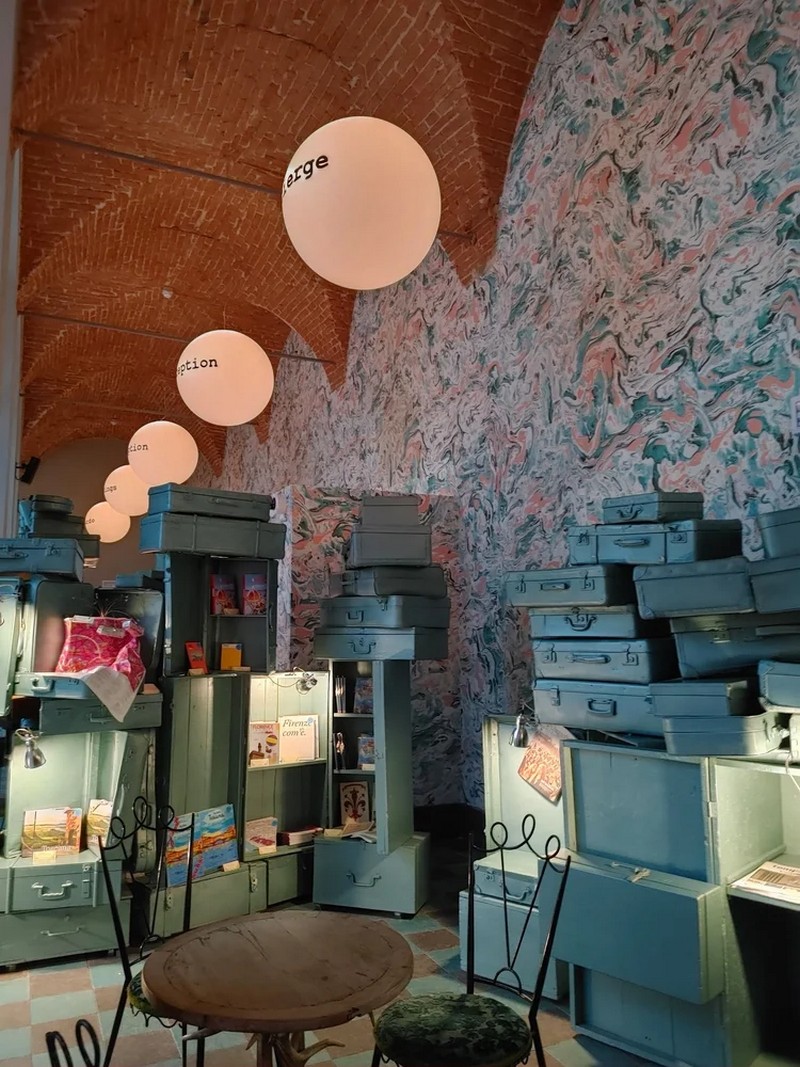
A quarter of a century after Hannibal Lecter, we find ourselves in the same city. Our reason for visiting was the 25hours Hotel Florence Piazza San Paolino, designed around the themes of Dante’s Divine Comedy. It is part of a hotel chain founded in Hamburg in 2003 by German hotelier Kai Hollmann. The first hotel opened in November 2003 in Hamburg’s Bahrenfeld district. Today, the chain operates 18 hotels in nine countries. Why 25hours? Because 24 hours simply isn’t enough, they say. The hotels (I had previously stayed at the one in Dubai) embrace an analogue aesthetic, with plenty of carefully chosen details: typewriters, wooden skis, 1950s refrigerators and Bakelite telephones of the kind our parents used to have.
Florence is one of those cities where you don’t necessarily have to visit museums and galleries to enjoy world-class art – it is everywhere around you.
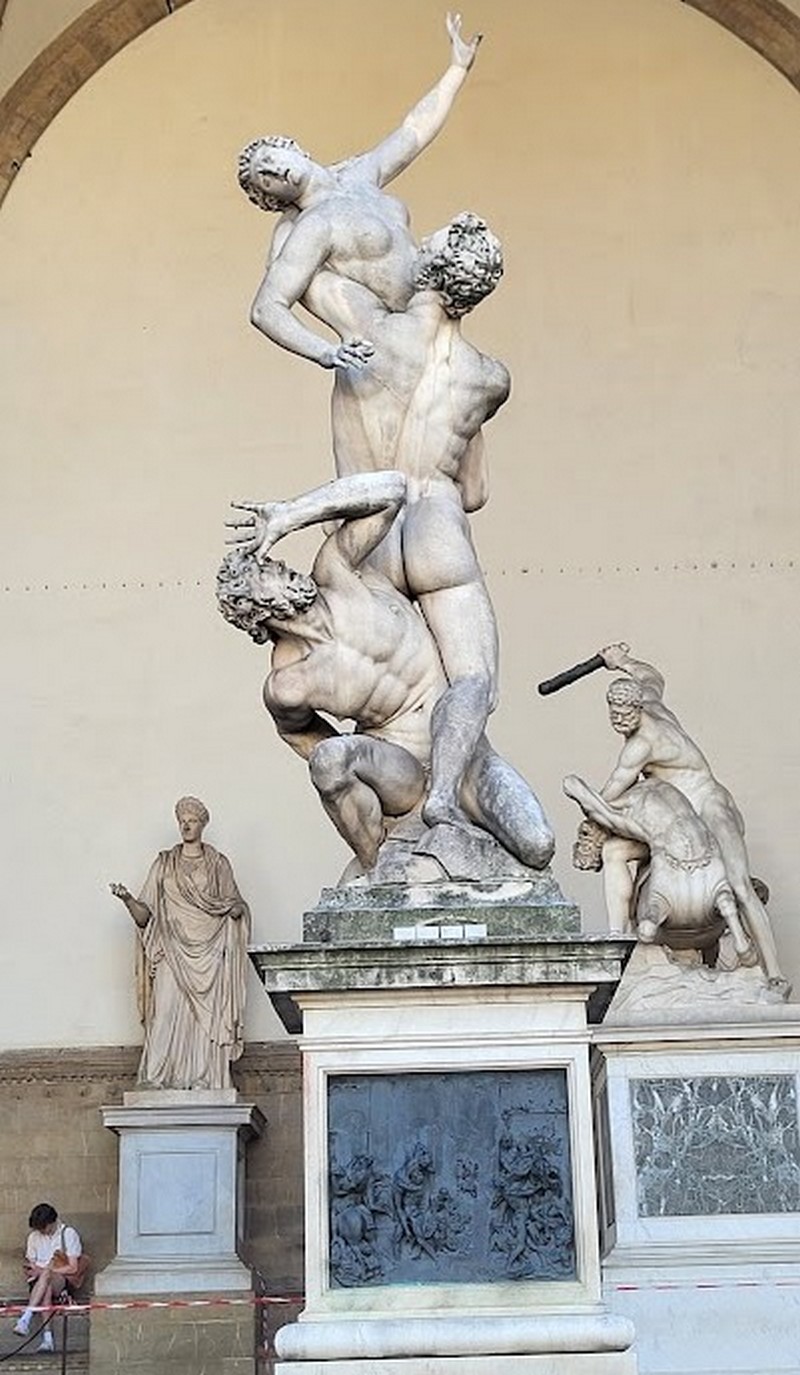
The Loggia dei Lanzi in Piazza della Signoria is an impressive open-sided arcade, with five large sculptural groups, six ancient female statues and two marble lions. Admission is free.
Alongside Perseus with the Head of Medusa, The Rape of the Sabine Women and Hercules and the Centaur, the loggia is home to The Rape of Polyxena by Pio Fedi (1865) and Menelaus Supporting the Body of Patroclus, an ancient Roman sculpture.
Along the rear wall of the loggia stand six Roman marble figures, mostly dating from the second century AD. Traditionally, they have been identified as follows: Thusnelda, the captive wife of the Germanic military leader Arminius, although this identification is not entirely certain; Matidia, a member of the Roman imperial family; Marciana, the sister of Emperor Trajan; and Agrippina the Younger, the mother of Emperor Nero. The identities of some of the figures remain a subject of scholarly debate.
The sculptures were brought to Florence in 1787 and installed in the loggia in 1789. There are also two Medici marble lions. One is of ancient Roman origin, while the other was sculpted by Flaminio Vacca in 1598. The lions once adorned the Villa Medici in Rome and were brought to Florence towards the end of the eighteenth century.
The Loggia dei Lanzi was not originally built as a museum, but as a venue for public ceremonies of the Florentine Republic. It was only under the Medici that it was transformed into an open-air sculpture gallery.
The Rape of Polyxena is particularly striking. In terms of its dramatic intensity and compositional complexity, it can rival the much better-known Rape of the Sabine Women by Giambologna, despite having been created almost three centuries later.
Perseus with the Severed Head of Medusa is another recurring subject in art. Here, in the Loggia dei Lanzi, we see Benvenuto Cellini’s celebrated sculpture, completed in 1554.
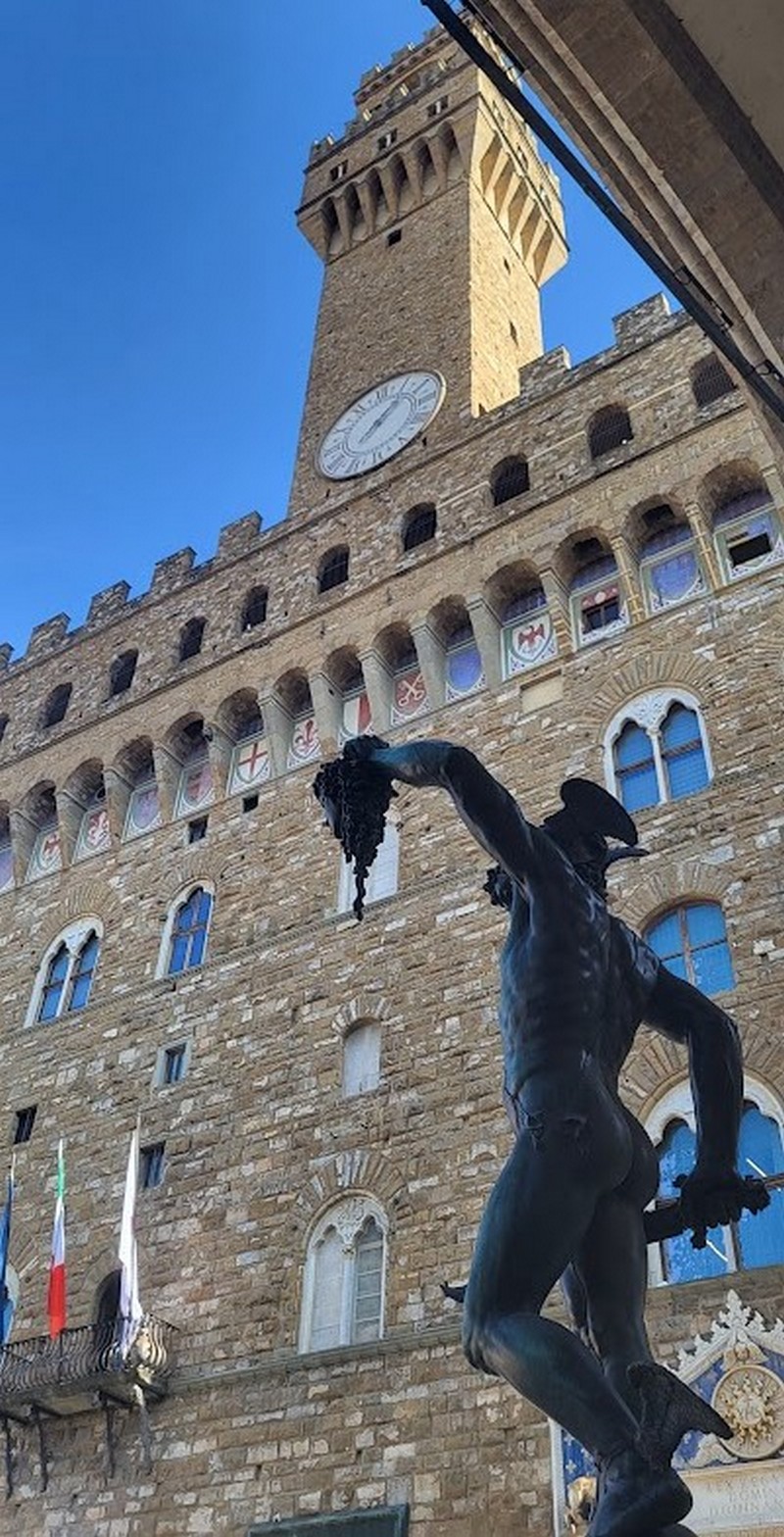
The story of Perseus and Medusa is one of the most fascinating myths of ancient Greece. Yet behind the familiar scene of a hero beheading a woman with snakes for hair lies a far more complex tale of violence, injustice, fate and political power.
What is particularly interesting is how interpretations of Medusa have changed over the centuries: from a terrifying monster to a symbol of a woman punished for the violence inflicted upon her.
Perseus was the son of Zeus, the supreme Greek god, and Danaë, daughter of King Acrisius of Argos. An oracle had foretold that Acrisius would be killed by his own grandson. In an attempt to escape this fate, he imprisoned Danaë in a bronze chamber so that she could never have a child. Zeus, however, approached her in the form of a shower of gold, and Perseus was born from their union.
When Acrisius learned of the child, he placed Danaë and the infant Perseus in a wooden chest and cast them into the sea. They survived and eventually reached the island of Seriphos, where they were rescued by a fisherman named Dictys.
Years later, Polydectes, Dictys’s brother and king of the island, wanted to marry Danaë. Perseus stood in his way, so the king sent him on an almost suicidal mission: to bring back the head of the Gorgon Medusa.
Medusa was one of the three Gorgons, daughters of the sea deities Phorcys and Ceto. Her sisters were Stheno and Euryale, both immortal, while Medusa alone was mortal and could be killed.
In the earliest Greek depictions, the Gorgons had terrifying faces, large teeth, sometimes tusks, wings and snakes. In later representations, Medusa gradually acquired more recognisably human and feminine features.
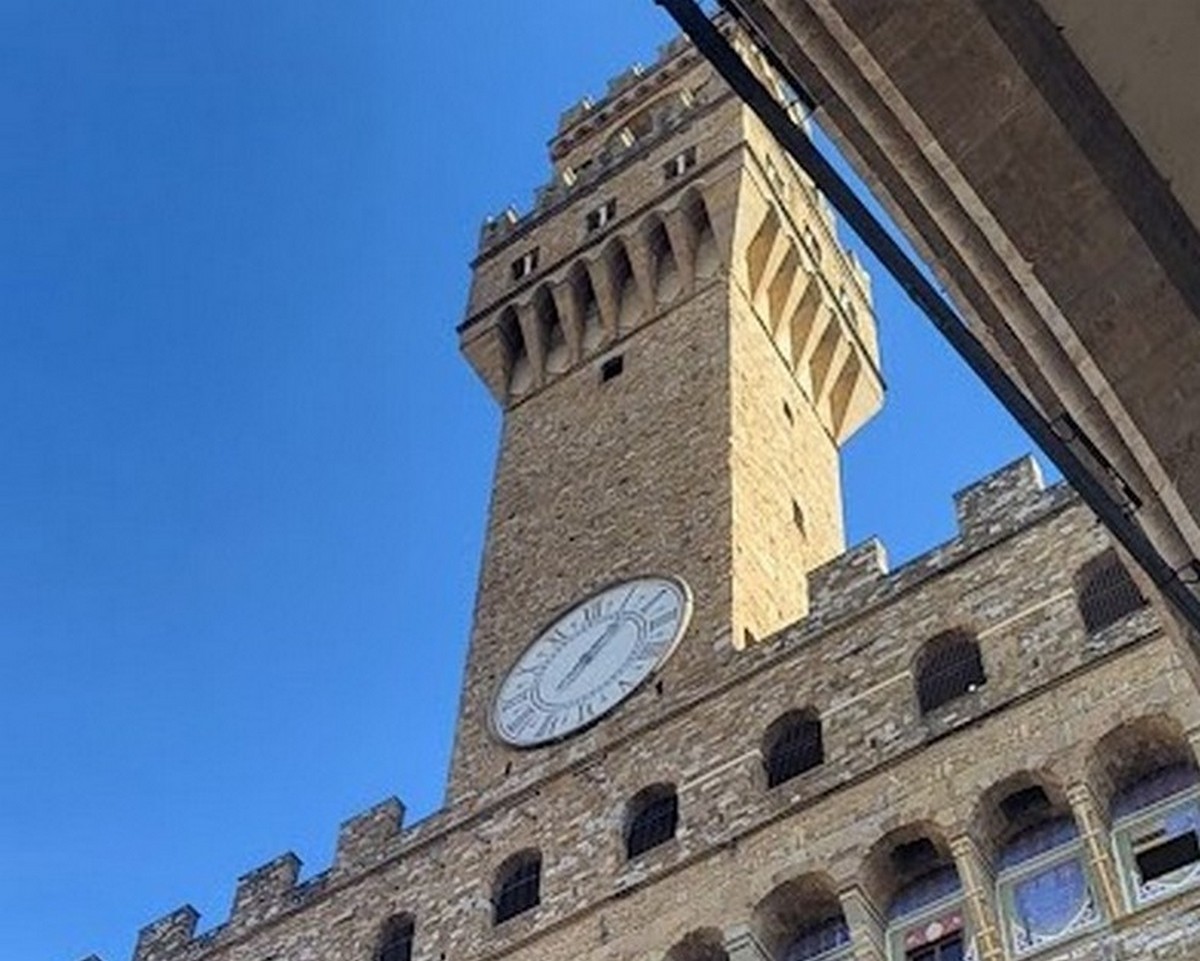
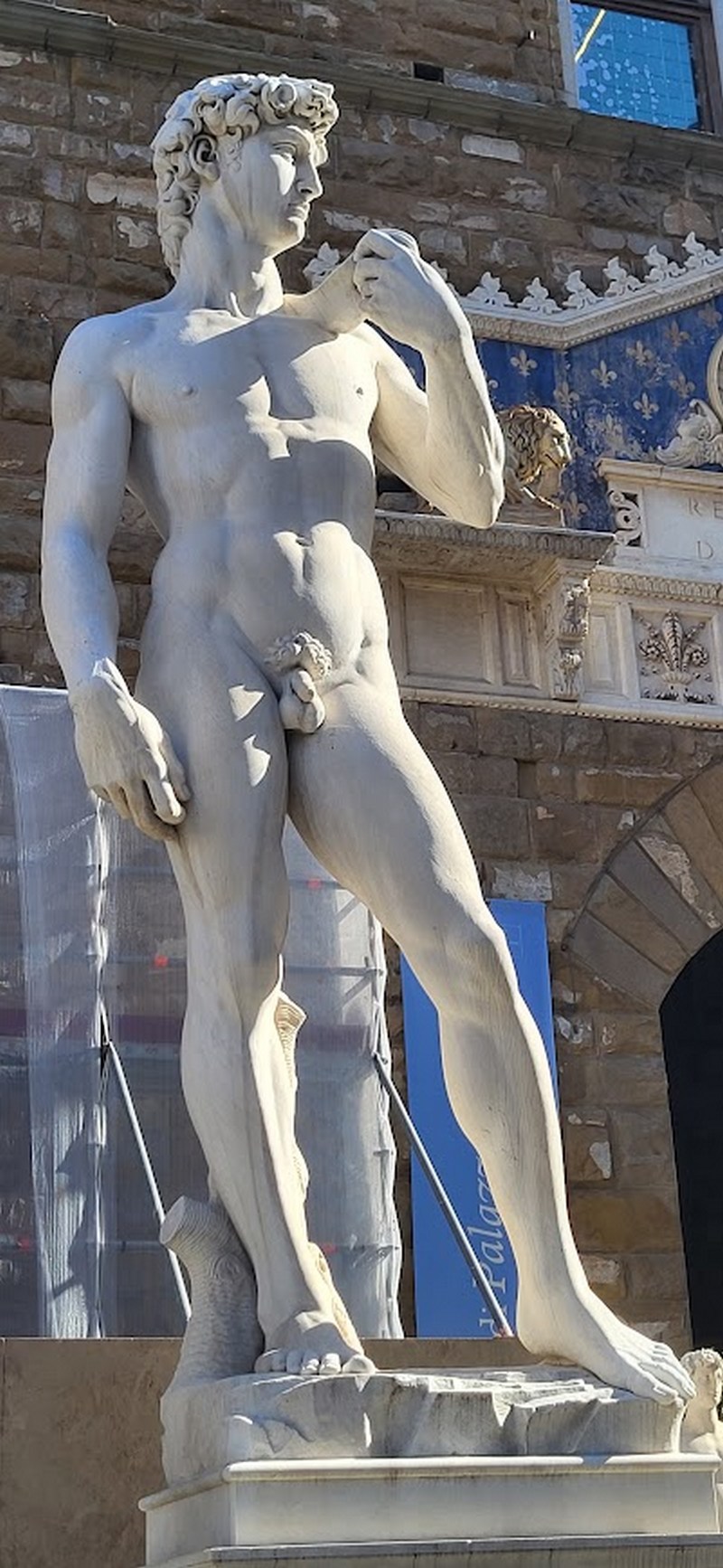
In front of the Palazzo Vecchio, just beside the Loggia dei Lanzi, stands one of the most celebrated sculptures of the Renaissance – or, more precisely, a replica of it: Michelangelo’s David.
The original sculpture was installed here in 1504 as a symbol of the freedom and independence of the Florentine Republic. In 1873, it was moved to the Galleria dell’Accademia to protect it from the elements, and in 1910 the marble replica we see today was placed in its position.
Interestingly, David was originally intended for Florence Cathedral. However, its extraordinary artistic and political significance led to its installation in front of the seat of the city’s government.
The façade of the Palazzo Vecchio is another location associated with the film Hannibal. In one of its most gruesome scenes, Hannibal Lecter kills Inspector Rinaldo Pazzi, played by Giancarlo Giannini, and hangs his body from a palace window, leaving it suspended above the square, with his abdomen slashed open and his intestines hanging out.
The scene carries a historical reference. In 1478, Francesco de’ Pazzi, an ancestor of the film’s inspector, was hanged from the same palace for his involvement in a conspiracy against the Medici family. In characteristic Lecter fashion, the killer deliberately recreates the manner of execution.
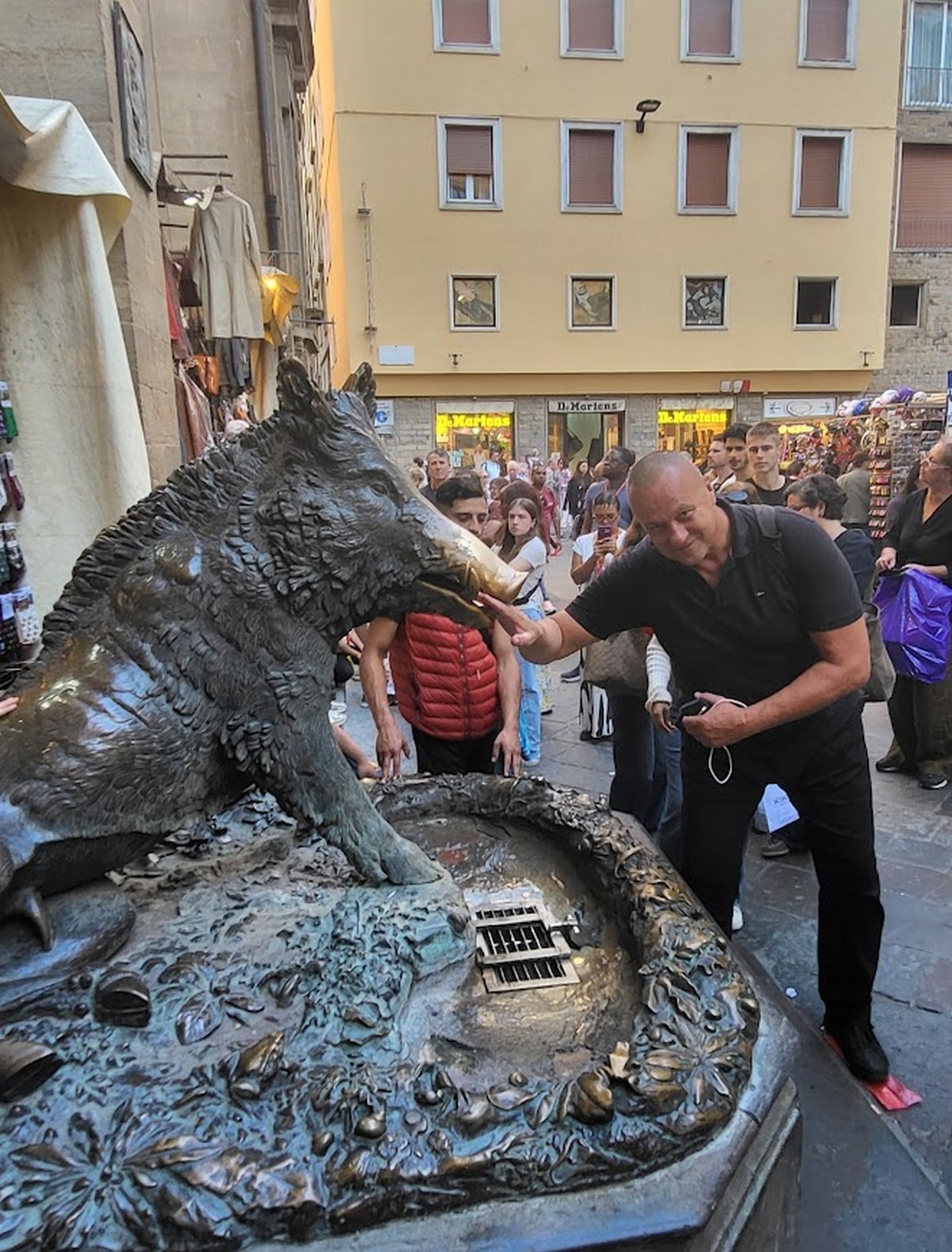
Immediately beside the palace is the Fountain of Neptune (Fontana del Nettuno). Its central sculpture depicts Neptune, the Roman god of the sea (the Greek Poseidon), and is the work of Bartolomeo Ammannati. Made of white Carrara marble, the fountain was constructed between 1565 and 1574. It was commissioned by Cosimo I de’ Medici.
Neptune’s face bears a resemblance to Cosimo I, while the fountain itself symbolises Florence’s maritime power and ambitions. Neptune stands on a chariot drawn by four sea horses, surrounded by bronze figures of marine deities.
Florentines nicknamed the sculpture Il Biancone (“The Big White One”) and were not particularly impressed when it was unveiled in 1565. The fountain was the first major public fountain in Florence.
Another fountain features in Hannibal. The Fountain of the Porcellino, with its bronze statue of a wild boar, is located near Mercato Nuovo, just a few minutes’ walk from Piazza della Signoria.
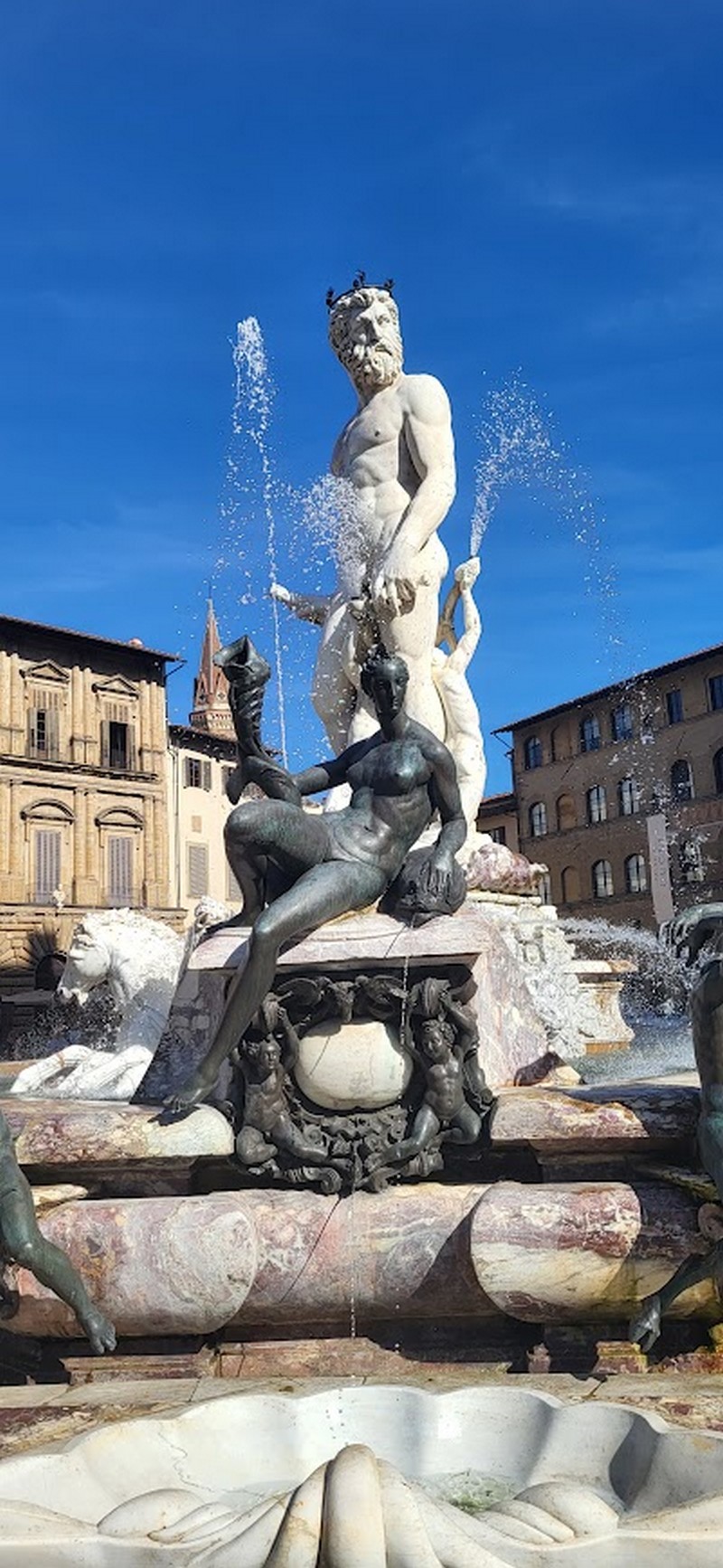
This is where the famous scene takes place in which Inspector Rinaldo Pazzi, played by Giancarlo Giannini, washes blood from his hands after Lecter mortally wounds a pickpocket known as Gnocco.
The fountain was created by Pietro Tacca in the seventeenth century. According to local tradition, rubbing the boar’s snout brings good luck, while tossing a coin into the fountain promises a return to Florence. Interestingly, the original bronze sculpture is now housed in the Museo Stefano Bardini, while the one in the square is a replica.
One exhibition did, however, particularly catch my attention: Broken. The Power of the Fragment, which explores broken and damaged sculptures and how their surviving fragments acquire new beauty, meaning and symbolic power. It is on view at Palazzo Strozzi until 27 January 2027.
The exhibition examines how works of art have been damaged through wars, revolutions, religious iconoclasm, vandalism and natural disasters, including the devastating Florence flood of 1966. It also features artists who deliberately create incomplete figures, using the fragment as an artistic expression in its own right.
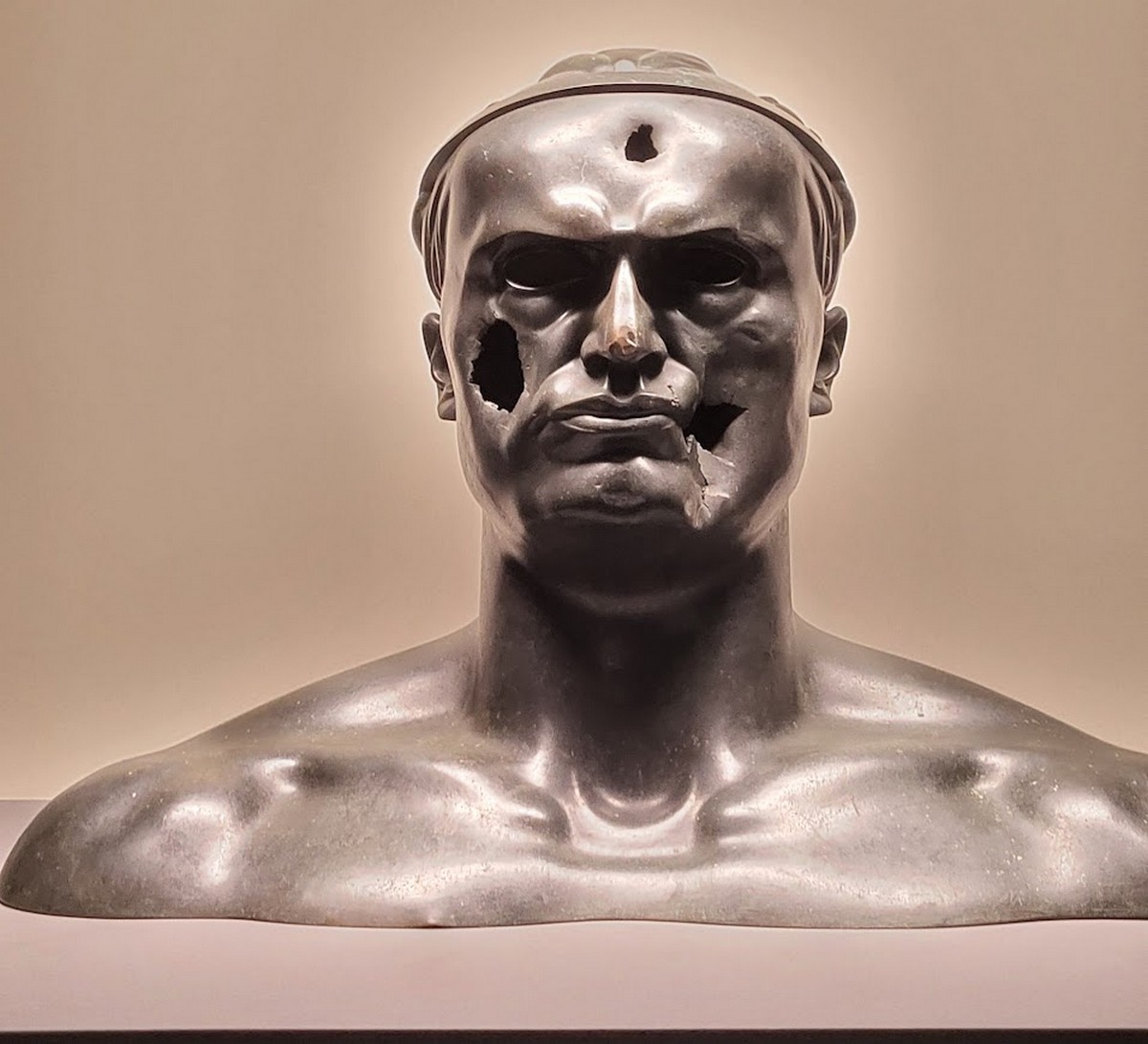
More than 80 works are brought together, spanning ancient Egypt and Greece, Michelangelo and Rodin, through to contemporary artists such as Louise Bourgeois. The central idea is that a fragment of a statue – a head, torso or hand – can become a powerful work of art in its own right, inviting our imagination to complete what is missing.
One work that made a particularly strong impression on me was the monumental portrait of Mussolini, created by Adolfo Wildt in 1923 for the headquarters of the Fascist Party in Milan (Casa del Fascio). It was struck with pickaxes during the liberation of Italy in April 1945.
The damage can be interpreted as an act of damnatio memoriae – the symbolic erasure of a dictator and his image from collective memory. Depictions of Mussolini were destroyed following the fall of Fascism, as part of a historical pattern that continues to this day.